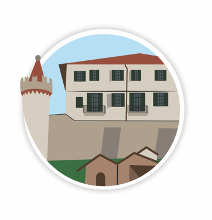
CASTELLO VESCOVILE
Il castello nel corso dei secoli subì diverse distruzioni e rifacimenti fino alla ricostruzione attuale rappresentata da un edificio massiccio che domina il borgo di Albiano. I vescovi della diocesi di Ivrea, ottenuto il governo della città e di molte terre, ne fecero la loro dimora estiva. Con una bella passeggiata attraverso gli antichi Ricetti, è possibile raggiungerlo a piedi partendo dal centro dell’abitato.
Over the centuries the castle underwent several destructions and renovations until the current reconstruction represented by a massive building overlooking the village of Albiano. The bishops of the diocese of Ivrea, having obtained the government of the city and many lands, made it their summer residence. With a nice walk through the ancient Ricetti, it is possible to reach it starting from the center of the town.
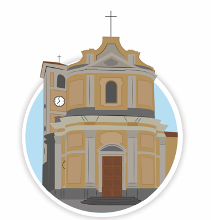
CHIESA PARROCCHIALE
La Chiesa parrocchiale è stata edificata tra il 1770 e il 1779, su disegno dell’architetto Martinez da Messina, pronipote del grande Filippo Juvarra. L’attiguo campanile risale invece al medioevo. È dedicata a San Martino, vescovo di Tours, poiché tradizione vuole che il santo vescovo francese sia passato per questo borgo nel IV secolo.
The Parish church was built between 1770 and 1779, designed by the architect Martinez da Messina, great-grandson of the great Filippo Juvarra. The adjacent steeple dates back to the Middle Ages. It is dedicated to San Martino, bishop of Tours, since tradition has it that the French saint bishop passed through this village in the 4th century.
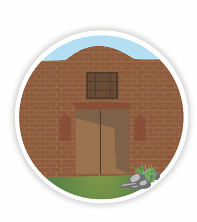
RICETTI
Costruiti ai piedi del Castello, sono fabbricati disposti a gradoni sul pendio della collina, addossati tra loro e aventi ciascuno una superficie di pochi metri quadrati con cantinato sottostante. Erano utilizzati come magazzini per custodire le provviste al sicuro dalle scorrerie dei predoni e in caso di assedi, ricorrenti per la rivalità tra i conti di Masino e il Vescovo di Ivrea, venivano utilizzati come rifugio dagli abitanti.
Built at the feet of the Castle, they are buildings arranged in steps on the slope of the hill, leaning against each other and each having a surface of a few square meters with a cellar below. They were used as warehouses to keep supplies safe from raiders and in case of sieges, recurring for the rivalry between the counts of Masino and the Bishop of Ivrea, they were used as a refuge by the inhabitants.

 qui sotto